Surabaya Interior Design: Hotel Guestrooms Designed for Easier Maintenance
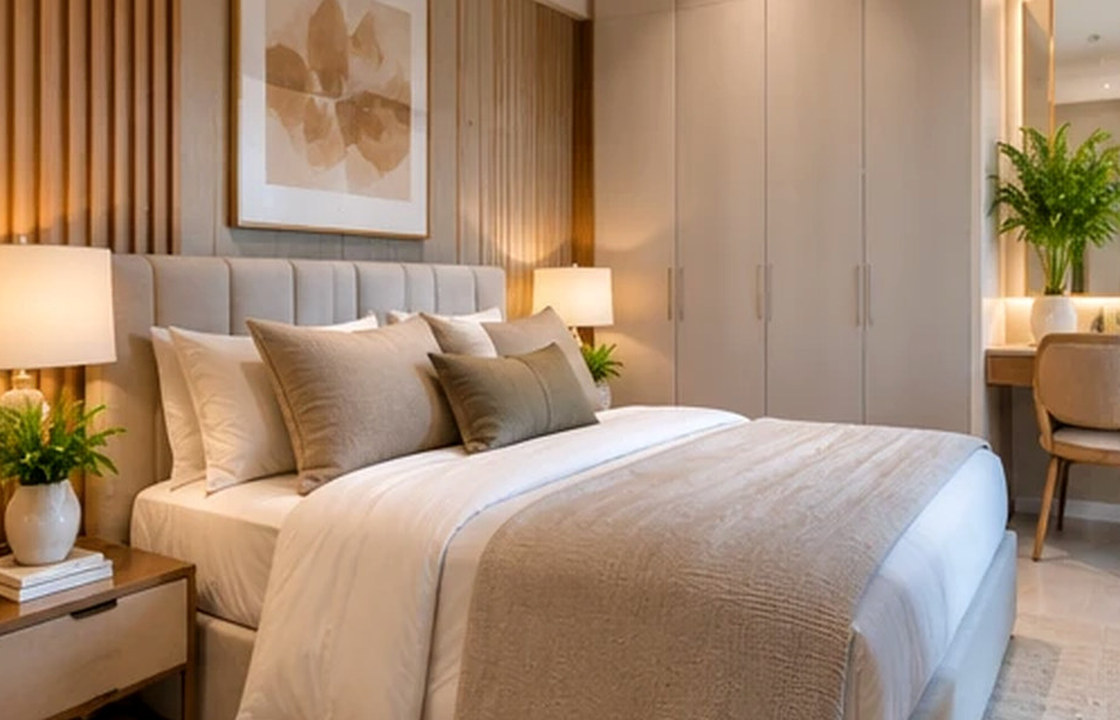
Conceptual editorial photograph. Not a documented SATU client project.
Hotel rooms must look welcoming repeatedly, not just on opening day. The practical approach is to review the real site, test daily use, resolve materials and services, and document decisions before procurement or construction.
Key takeaways
- Design for repeated use
- Make high-wear parts replaceable
- Consult housekeeping early
- Consider life-cycle cost
Start with the real site and brief
Hotel rooms must look welcoming repeatedly, not just on opening day. For Surabaya hotels, daily housekeeping, frequent luggage contact and air-conditioning operation shape which interior details will last. A material that photographs beautifully but cannot be cleaned or repaired efficiently may increase operating cost.
Hospitality rooms are used repeatedly by people who do not know the building. Guests need comfort, legibility, privacy and simple controls; operators need serviceable construction and efficient staff routes. Successful interiors bring those two experiences into a coherent plan.
Plan the space before the finishes
Review how a guest enters, sets down luggage, charges devices, uses the bathroom and gets ready in the morning. Place switches and outlets where they are intuitive, not hidden behind furniture. Keep housekeeping routes and reach to surfaces practical.
A plan should be discussed as a sequence of everyday activities, not only as a static drawing. Before approving it, ask what the user will be carrying, where doors and drawers will open, and which paths become crowded at the busiest time. A simple on-site walk-through or full-size mock-up often exposes conflicts earlier than a polished rendering.
Make material choices work long term
Choose robust headboard surfaces, replaceable lamp fittings, washable upholstery and serviceable bathroom accessories. Resolve moisture-prone joinery edges and avoid elaborate recesses that trap dust. Provide practical bedside and task lighting while preserving an atmosphere of rest.
For every proposed finish or fixture, compare appearance with cleaning, access, replaceability and exposure to heat or moisture. A durable detail is one the operator can maintain after handover; a specification is incomplete if it identifies the colour but not the construction, junctions or upkeep.
Coordinate the detailed decisions
Work with housekeeping and maintenance teams before final details are approved. Ask how often items are replaced, how repairs are logged and what spare parts can be stocked. Coordinate mechanical access and avoid permanently enclosing equipment that needs routine servicing.
Guest safety, accessibility and specialist building services require project-specific professional reviews. Editorial design advice does not replace technical commissioning or formal approval.
A realistic design scenario
A hotel may replace a fragile decorative bedside table with a durable unit that has rounded edges and a removable top panel. The room can retain its design character while becoming easier to maintain across hundreds of stays.
Use the scenario as a test rather than a prescribed answer. Compare at least two workable alternatives and write down what each changes: movement, daylight, privacy, material cost, cleaning effort and future adaptability. That makes the final decision easier to explain to people who were not present during the design discussion.
Common mistakes and trade-offs
The cheapest initial fitting is not always the most economical. Evaluate service life, replacement lead time and guest disruption as well as procurement price.
Trade-offs should be made visible in drawings and the decision log. For example, an attractive element may be retained while changing its size, position or material so that the room becomes easier to use. Record which objectives are essential, which are desirable and which can be deferred when cost or site conditions change.
On-site decision checklist
- Walk a typical housekeeping cleaning sequence
- Check replacement parts for lights and fittings
- Protect common luggage impact zones
- Keep equipment and plumbing serviceable
- Review bedroom and bathroom material maintenance
Questions to include in your project brief
Before commissioning a detailed design, share the location, approximate area, photographs, available plans, intended users, priorities and budget range. Explain what is not working today and what success should look like after occupation. This is more useful than beginning with a list of favourite styles alone.
For this particular brief, bring the checklist above to the site visit and identify any unknown dimensions or technical conditions. Separate immediate decisions from items that need specialist verification. The resulting scope should spell out proposed drawings, approvals, procurement responsibilities and the expected delivery route.
Frequently asked questions
Why does hotel maintenance belong in the design brief?
Because room downtime, cleaning time and replacement costs affect performance throughout the operating life.
Should all guestroom finishes be identical?
Consistency can simplify replacements, but the hotel may still use controlled variations in higher-category rooms.
How can custom furniture remain repairable?
Specify accessible fixings, replaceable parts and documented finishes, rather than permanently bonding every component.
Good design is a sequence of well-informed decisions, not only a final image.
If you are planning hotel guestrooms designed for easier maintenance in Surabaya, use these notes to organise the first conversation. You can review service scopes or discuss your actual site and priorities before final commitments are made.